How to Become a Solicitor in England and Wales: The SQE Route, Real Costs — and What NQ Pay Actually Looks Like
The route into the solicitors' profession has been rebuilt: the SQE — the Solicitors Qualifying Examination — replaced the old LPC-and-training-contract monopoly with a standardised set of exams and a radically more flexible experience requirement. It's opened the profession to career changers, paralegals and any-degree graduates — while quietly shifting the hard part from getting a contract to passing the exams. Here's the honest 2026 map.
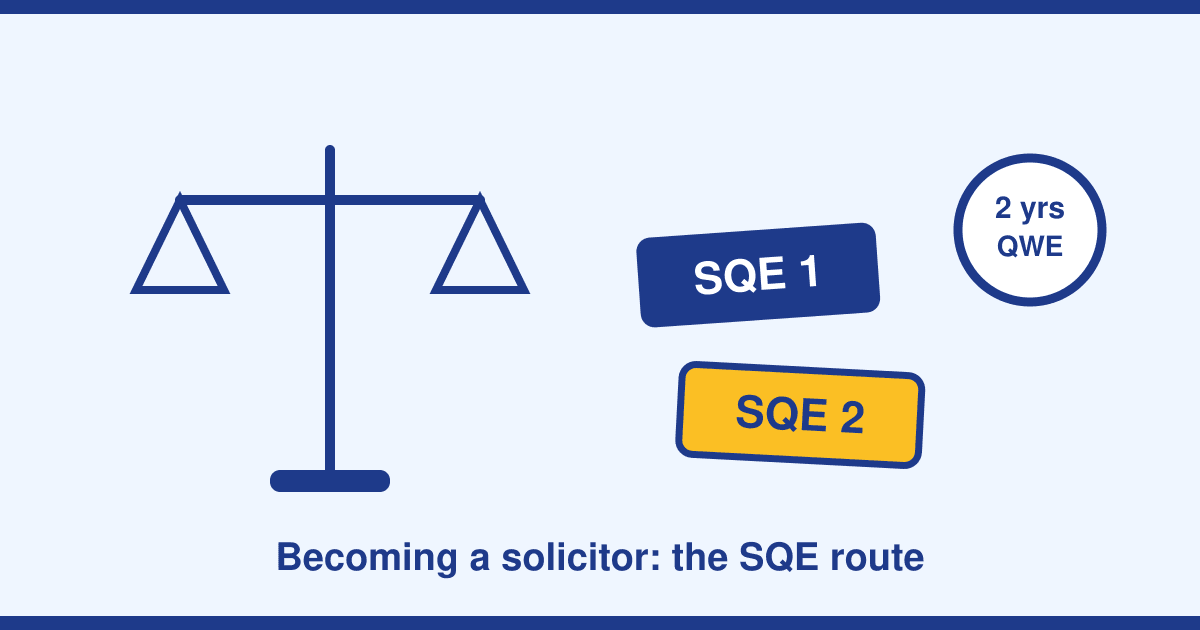
In short: Qualification now means four things: a degree in any subject, passing SQE1 (legal knowledge) and SQE2 (practical skills) — £5,092 in exam fees for sittings after September 2026 — plus two years of Qualifying Work Experience (QWE), which no longer has to be a traditional training contract, and the SRA's character requirements. NQ pay then depends on the firm, not the route: £35,000–£55,000 regional, £90,000–£100,000 Silver Circle, ~£125,000 Magic Circle.
The four building blocks
| Requirement | The detail |
|---|---|
| Degree (any subject) | Law degrees help with SQE1 content, but history, sciences and career changers qualify identically |
| SQE1 — £2,006 | Functioning legal knowledge: two long multiple-choice assessments across the core practice areas |
| SQE2 — £3,086 | Practical skills: advocacy, interviewing, drafting, research and writing, assessed through simulations |
| 2 years' QWE | Legal work experience — paralegal roles, in-house teams, law clinics count; can be split across up to four organisations |
The quiet revolution is that last row: experience gathered as a paralegal, in-house, or at a law clinic counts — signed off, it's qualifying experience, no training contract required. Most candidates still sequence it traditionally (SQE1 → experience → SQE2), and the SRA expects most graduates to pass SQE1 before their main experience period — but the paralegal-to-solicitor route is now a genuine highway rather than a loophole.
The real costs (and the prep-course question)
Exam fees are the fixed part: £5,092 total. Preparation is where budgets diverge — from a few hundred pounds of self-study materials to £15,000+ for full provider programmes. The honest framing: SQE1's pass rates punish under-preparation, and large firms typically fund a full prep course for their future trainees — but self-funders pass on disciplined cheaper routes every sitting. Treat the £15k question like any investment: what does your employer fund, what's your study discipline, and what does a resit cost you in time?
What NQ life pays
- Regional firms: £35,000 – £55,000
- Silver Circle: £90,000 – £100,000
- Magic Circle: ~£125,000
- The determinant: not your qualification route — the firm you trained at, the seat you qualify into and your practice area's market set the number. SQE-route and LPC-era NQs sit on the same pay scales.
Three honest route choices
- The funded traditional route: training contract (now "graduate solicitor apprenticeship" in places) at a firm that pays fees and salary — competitive as ever, and still the smoothest financially.
- The paralegal accumulation route: work as a paralegal, bank QWE, self-fund exams — slower, debt-light, and now fully legitimate; the route most transformed by the SQE.
- Solicitor apprenticeships (school-leaver): six years, no university fees, salary throughout — the long game that ends in the same admission ceremony.
For clients reading sideways: this machinery — exams, supervised experience, SRA admission and ongoing regulation — is what stands behind the title, and why checking a solicitor is genuine and regulated takes one register search. It's also the cost base behind what solicitors charge — find vetted solicitors near you here.
The bottom line
Any degree, two exams at £5,092, two flexible years of QWE — the gate is wider than it's been in a generation, and the filter has moved into the exam halls and the NQ job market. Sequence SQE1 early, bank experience deliberately (get it signed off as you go), and choose the prep spend with an employer-funding conversation first.
Frequently asked questions
The Solicitors Qualifying Examination: a degree in any subject, passing SQE1 (legal knowledge) and SQE2 (practical skills), two years of Qualifying Work Experience and meeting the SRA’s character requirements. It replaced the LPC-and-training-contract route as the standard path in England and Wales.
Exam fees total £5,092 for sittings after September 2026 (SQE1 £2,006, SQE2 £3,086). Preparation costs vary hugely — from a few hundred pounds of self-study materials to £15,000+ for full provider courses, which larger firms typically fund for their trainees.
No — that is the SQE’s biggest change. Two years of legal work experience counts, including paralegal roles, in-house legal teams and law clinics, and it can be split across up to four organisations, provided it is properly signed off. The traditional training contract remains one valid format among several.
It depends on the firm rather than the qualification route: regional firms pay £35,000–£55,000, Silver Circle firms £90,000–£100,000 and Magic Circle firms around £125,000 at NQ level — with practice area and the seat you qualify into mattering more than whether you took the SQE or the old LPC.